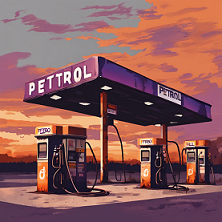
Pumps lack fuel, but illegal sellers offer it nearby in Manipur.
Imphal 23/08/2024 by Th Ramananda Singh
Pumps Lack Fuel, but Illegal Sellers Offer It Nearby in Manipur: An Unfolding Crisis in 2024
In 2024, Manipur finds itself entangled in a fuel crisis, leaving citizens struggling to find petrol at official pumps. While petrol stations display ‘No Fuel’ signs, a parallel market thrives just a few steps away. The irony is hard to miss—pumps lack fuel, but illegal sellers offer it nearby in Manipur. This perplexing situation raises numerous questions: where do these black marketers get their fuel stock? Who supplies it to the illegal sellers? Is this operation legal? Who controls it? Did profit-hungry individuals preplan the crisis? And most importantly, is the petrol sold in the black market pure or contaminated?
The Crisis Unfolds: Pumps Lack Fuel, but Illegal Sellers Offer It Nearby in Manipur
The sight of dry petrol pumps has become all too familiar in Manipur. Amid fuel shortages, illegal sellers in Manipur are quickly directing desperate drivers to their supply, raising questions about its origin. Black marketers operate within a larger network, ensuring a steady petrol supply despite the official scarcity.
Where Do Black Marketers Get Their Fuel Stock?
The question of where black marketers get their fuel stock is one that many in Manipur are asking. Pumps lack fuel, but illegal sellers offer it nearby in Manipur, leading to speculation about the source of this mysterious supply. Investigations suggest that the fuel comes from a variety of sources. Some of it is siphoned off from official supplies, while other quantities are smuggled in from neighbouring states. The lack of stringent monitoring at certain checkpoints allows these illegal activities to flourish, exacerbating the crisis where pumps lack fuel, but illegal sellers offer it nearby in Manipur.
Who Provides the Stock to Illegal Sellers?
Understanding who provides the stock to illegal sellers is crucial to grasping the full extent of the fuel crisis in Manipur. Pumps lack fuel, but illegal sellers offer it nearby, thanks to a network that includes corrupt officials, transporters, and even some employees at petrol pumps. These individuals divert fuel from legitimate channels, selling it at inflated prices to black marketers. The result is that while pumps lack fuel, illegal sellers offer it nearby in Manipur, creating a shadow economy that thrives on the desperation of the public.
The Legal Implications: Is This Operation Legal?
However, the fact that pumps lack fuel, but illegal sellers offer it nearby in Manipur, suggests that either the scale of the operation overwhelms law enforcement or they deliberately turn a blind eye.
Who Controls the Illegal Fuel Market?
A complex web of individuals and groups controls the illegal fuel market in Manipur, working together to ensure that pumps lack fuel while illegal sellers offer it nearby. At the top of the hierarchy are powerful individuals who have the resources and connections to manipulate the supply chain. These people ensure that fuel is diverted from legitimate sources and distributed to black marketers. As a result, even though pumps lack fuel, illegal sellers offer it nearby in Manipur, keeping the wheels of this underground economy turning.
A Preplanned Crisis by Profit-Driven Individuals?
In Manipur, whispers circulate about whether profit-driven individuals have preplanned the fuel crisis. The absence of fuel at pumps paired with nearby illegal sellers hints at a possible deliberate shortage. Some suspect that certain groups are creating scarcity to inflate black market prices, which can reach Rs 120 to Rs 160 per litre. If true, the fuel crisis in Manipur reflects not just mismanagement but potential economic sabotage.
The Price of Black Market Petrol: An Unfair Burden on the Public
The exorbitant prices charged in the black market are a heavy burden on the public. While pumps lack fuel, illegal sellers offer it nearby in Manipur at prices that are far beyond the official rate. The average citizen, already grappling with inflation and economic challenges, is forced to pay up to Rs. 160 per litre just to keep their vehicles running. This situation is unsustainable and has led to widespread anger and frustration among the people, who see no end in sight to the crisis where pumps lack fuel, but illegal sellers offer it nearby in Manipur.
Is the Petrol Pure or Contaminated? The Public Remains in the Dark
One of the most worrying aspects of the current situation is the question of fuel quality. While pumps lack fuel, illegal sellers offer it nearby in Manipur, but there is no guarantee that the petrol sold on the black market is pure. Concerns are rising that sellers mix much of the fuel with kerosene to boost profits, leading to contamination. Desperate for petrol, the public often resorts to buying from these illegal sellers, risking damage to their vehicles. The fact that pumps lack fuel, but illegal sellers offer it nearby in Manipur adds an extra layer of anxiety to an already dire situation.
The Role of Law Enforcement: Turning a Blind Eye or Out of Their Depth?
Law enforcement’s role in this crisis cannot be overlooked. The fact that pumps lack fuel, but illegal sellers offer it nearby in Manipur suggests either a lack of enforcement or a deliberate blind eye turned towards the illegal trade. There have been sporadic crackdowns, but these are few and far between, and the illegal fuel market quickly recovers. The challenge for law enforcement is significant—this is not just a matter of arresting a few black marketers but dismantling an entire network that ensures pumps lack fuel, but illegal sellers offer it nearby in Manipur. Until this happens, the crisis will likely continue.
Conclusion: A Call for Action
The situation in Manipur, where pumps lack fuel, but illegal sellers offer it nearby, is a complex and multifaceted issue. It involves corruption, weak law enforcement, and possibly premeditated actions by those who seek to profit from the misery of others. This crisis forces the public to bear the brunt, paying exorbitant prices for possibly contaminated fuel while official pumps remain dry. There is an urgent need for action—both from the authorities to clamp down on illegal activities and from society to demand greater accountability. Only then can Manipur resolve this crisis and ensure that its citizens no longer face the choice between going without fuel or buying it from illegal sellers at exorbitant rates.
The Next Steps: What Can Be Done?
Addressing the fuel crisis in Manipur, where pumps lack fuel, but illegal sellers offer it nearby, requires implementing several key measures. Firstly, authorities must launch a comprehensive investigation to trace the origins of the black market fuel. Secondly, stricter enforcement of laws against illegal fuel trading is essential. Thirdly, authorities must educate the public about the risks of using contaminated fuel and the importance of reporting illegal activities. Finally, the government must ensure a steady supply of fuel to official pumps, so the crisis where pumps lack fuel, but illegal sellers offer it nearby in Manipur becomes a thing of the past.
This ongoing fuel crisis, where pumps lack fuel, but illegal sellers offer it nearby in Manipur, reflects broader issues of governance, law enforcement, and economic inequality. It serves as a stark reminder of the challenges facing the region and the urgent need for reforms to protect the interests of ordinary citizens.











1 comment